
Celebrate Advent at Mallard Creek Presbyterian Church
CHRISTMAS DAY
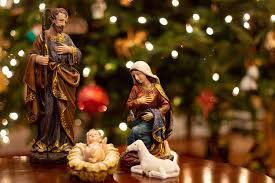 THE FEAST OF THE NATIVITY: GOOD NEWS OF GREAT JOY
THURSDAY
Let Luke’s story take you where it will today. Just take time to sit with it.
Meditate on Mary and Joseph, heading into Bethlehem because the powers that be told them to go. Think of their fear and worry as they sought room, finding only a barn. Think of their wonderment as Mary held her newborn child in her arms.
Join the shepherds in joyful praise of God who seeks the reclamation of all people.
Think of Bethlehem awoken before dawn by the songs and shouts of these same shepherds proclaiming a miracle.
Take the whole day in. Allow it to light your life with unquenchable glory.
Scripture: Luke 2:1-14
Prayer—
We hear the angels sing
O Lord
We hear the announcement of good news of great joy
We hear the songs of a newborn Savior
We welcome the glorious light of Christmas
Into our hearts
Into our homes
And
Into our world
Joy to the world!
Amen
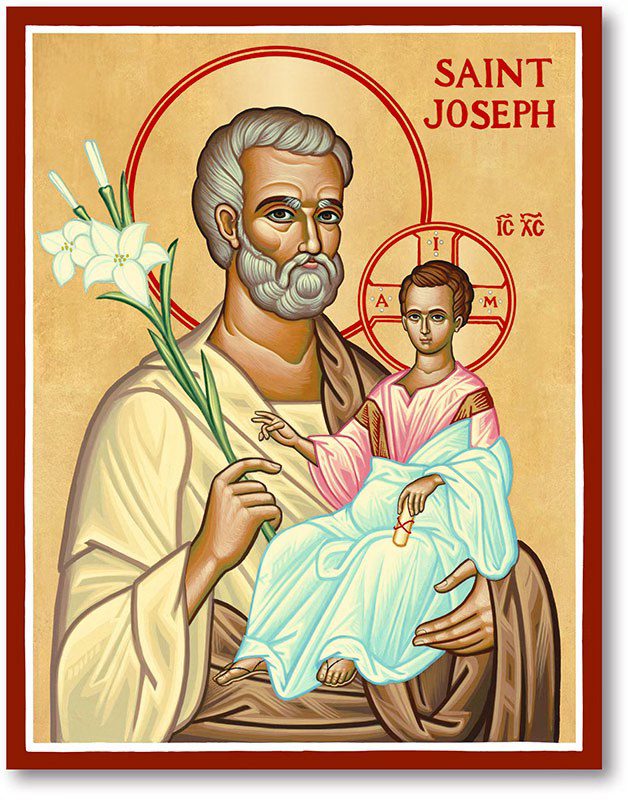 THE FEAST OF THE NATIVITY: GOOD NEWS OF GREAT JOY
Christmas Eve
Joseph is sometimes overlooked in the gospels. He has no speaking parts. He pretty much vanishes after Jesus reaches adulthood.
Yet, without him, there would be no celebration on this glorious night.
Joseph was a dreamer, just like his namesake—Jacob’s younger son whose dreams got him in a world of trouble with his brothers, yet whose dreams preserved those very same brothers and made sure Israel would survive to become the covenant community of God. Likewise, our Joseph’s dreams led him as sought to protect his newborn son from harm. They gave him insight into the mind of God.
Joseph was a paragon of faith. Following an angelic vision, Joseph trusted God enough to risk marrying a woman the world would see as damaged, corrupt, and contemptible—unwed mothers were deeply rejected in 1st Century Palestine. He trusted God enough to flee to Egypt. He trusted God enough to believe his son was destined for miraculous work on behalf of God. His trust is what faith is really all about.
On this Christmas Eve, may we remember Joseph. May we picture him knocking on doors to find a room for his wife bursting with a new baby. May we watch him as he watches over Mary as she gives birth. May we marvel with him as he wonders at the praises coming from the shepherds.
May we share his faith.
Scripture: Matthew 1:18-25
Prayer—
Glory be to you
O God
For calling Joseph to be Jesus’ father
May we model our faith on his
Practicing love when all seems futile
Dreaming of better days through you
And
Protecting those entrusted to us
Glory be to you
Amen
 Tuesday: St John declared that the only way for the Church to be the Church was for it to be a community of love.
What does he mean by that?
Within the fellowship of the Church, one should be able to discern the practice of love, the words of love, and the way of love.
And what does that mean?
It means the Church should above all be known by its self-sacrificial compassion. Anyone who enters any church should feel loved—welcomed, affirmed, and accepted as a child of God. They should know that they have worth, value, meaning, and purpose simply by entering the confines of the community of Jesus.
That is a tall order! But it is one that John believed in firmly and resolutely. There is really only one means by which to offer real and complete thanksgiving for the gift of God’s Son—to live as Christ lived within the world. We are to model our lives on the life of Jesus. Watch how he interacted with the people around him. Listen to how he spoke with them. See who it was he sought out. Listen to the message he preached to them. Then, as he often said, go and do likewise.
The Church should be the place above all where we learn to be and do as Christ did. We need to remember that as we seek to be the Church. Does love inform our works? Does it lead our ministries? Does it shape our witness within the world?
Dedicating ourselves to such a practice fully integrates us into the being of Christ. We become his hands and feet within the world.
What a great way to celebrate Christmas!
Scripture: 1 John 4:7-21
Prayer—
Lord of Love
Empower us for the practice of love
Enable us to share the love that you have shared with all of us
May your love reign over all the earth
May your love guide our thoughts, words, and actions
May your love be our end
Amen
 Monday: St Paul will never be heralded as a great writer of Hallmark greeting cards. He was too thorny. He was too strident. He was too demanding to ever be known as a purveyor of basic sentimentality.
Yet, so many couples turn to 1 Corinthians when trying to find a scripture text to undergird their wedding ceremony. They assume an entire chapter devoted to the explication and explanation of love must be appropriate for a wedding.
And they are right, but not in the ways they might assume they are.
Paul does indeed define love and its practice. But in reading through his paragraph, it does not take long to realize there is nothing sentimental in what he writes. He knows full well how hard real love is to live into. He knows that many of the ways we humans tend to define love are cheap and shallow. He knows love is far more profound than we can imagine. He stands in awe of what love actually is, and what it can achieve.
And so should we all as we enter a covenant of love. Love takes work. Love takes patience. Love takes time. Love takes a willingness to sacrifice ourselves for the sake of someone else.
And that is exactly what Jesus lived as he came as the deepest expression of God’s love for all of us.
So, reread Paul’s great love chapter. Allow it to recalibrate your vision. Allow it to teach you the ways and means of love. Allow it to define how you celebrate the presence of love this Christmas.
Scripture: 1 Corinthians 13
Prayer—
O Lord
Teach us what love is
Teach us the ways of love
Teach us the cost of love
Teach us how to love
Amen
 Sunday: What is love really? Is it simply an emotional charge we feel when we encounter someone we really, REALLY want to be with? Is it a bond that connects us to another human being? Is it a longing? Is it simply a feeling?
Many scholars and theologians believe St John was the New Testament writer of love. In the first epistle, he defines God as love—and it is that blunt and direct—GOD IS LOVE (1 John 4:7). John finds that love as defined by God is a whole lot more than just a feeling, or a desire, or even a bond between persons. It is a self-giving. It is the establishment of communion—a twining together of souls.
This is how deeply God loved the world that God created, including us within it. God wanted nothing to impede or inhibit our communion with God.
So God sent his Son to us. God sent his Son to be one with us, one for us, one among us, and one of us. God wanted to experience everything you and I experience, from the highs to the lows. God wanted to experience every aspect of life as we live it.
And that is what Christmas is all about.
God comes to us as an infant, experiencing the most helpless, most dependent form of life we live. It will require love to bring such a promise to fruition.
Do we consider how deeply Mary and Joseph LOVED? They took on God as their tender charge. They nurtured GOD into being, raising Jesus to adulthood. They taught him, washed him, fed him, tended him, and protected him.
All so love could reign over us.
God did not condemn us—God loved us.
Scripture: John 3:16-17
Prayer—
Gracious God
May we never take your love for granted
Indeed—we would be lost if not for your love
You have formed us to be your people
You have shaped us to be instruments of your love
Within the world
You seek and search for us
May we enter the fold of your love
Amen
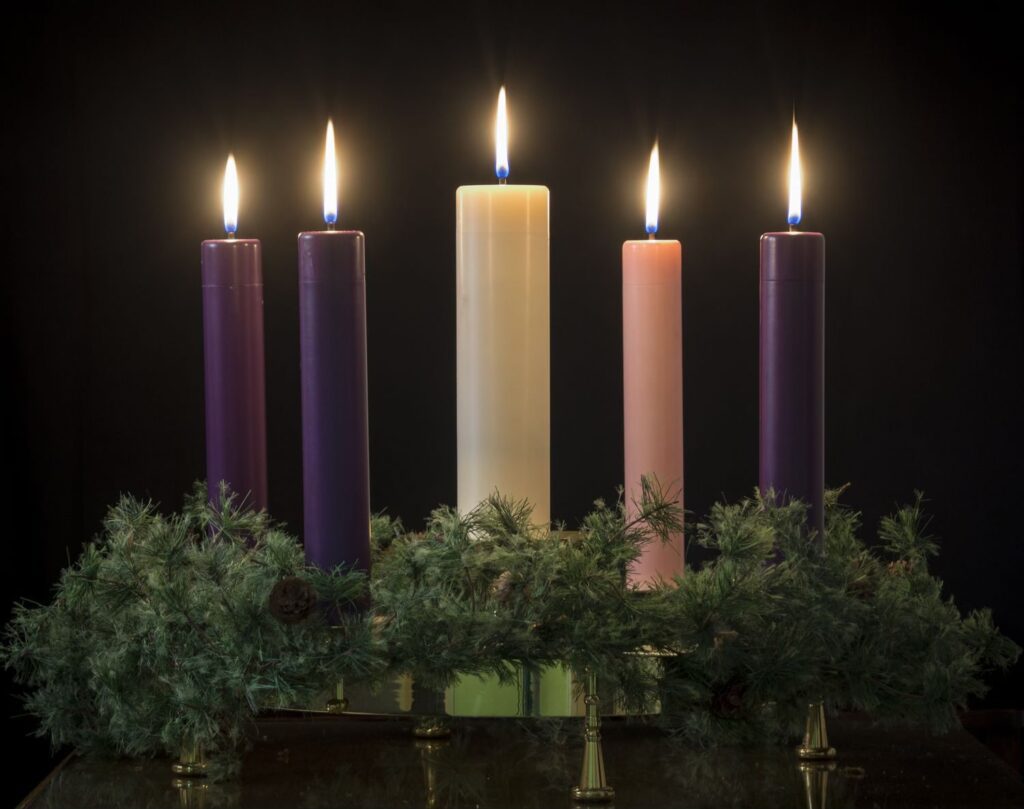 Saturday: And we come to the end of the third week of Advent. We are almost there. The time is fast approaching for us to welcome anew Christ, the newborn king, the Savior of one and all.
Hopefully, we have found moments of joy to brighten our days. Hopefully, we have found some moments of stillness to simply sit still and ponder the wonderful good news of great joy. Hopefully, we can enter the days ahead, knowing God is already present and active, redeeming one and all.
You see, the great themes of Advent—Hope, Peace, Joy, and Love—all weave together. They create room within our hearts for God to enter within, shaping and forming us as disciples of Jesus, whose birth we celebrate.
This week of joy reminds us that the Gospel truly is Good News. Yes, we are constantly reminded of all the ways in which the world looks nothing at all like the Kingdom of God. Yes, there is more than enough evidence present every single day to confirm that John Calvin’s most accurate dogma was the belief in Total Depravity. But Advent reminds us that the Gospel revolves around this thought—
For God so loved the world, that God gave God’s only Son, so that whoever
believes in him may not perish, but have eternal life…
God loves us—God does not condemn us. God gives to us—God does not withdraw from us.
That is the root of a joy that is truly everlasting. May it fill your heart, open your minds, and comfort your spirits now and always.
Scripture: John 3:16-17
Prayer—
O Lord
May good news of great joy resound within us
May we sing loudly and strongly of your amazing grace
May we fully welcome the Christ Child into our lives
Come, Lord Jesus
Amen
 Friday: In our time and place, we tend to compartmentalize things. We have schedules that direct our time—700 am is for breakfast; 730 am is for brushing our teeth; 745 am is starting the morning commute—then work imposes set times for every activity…and on it goes. Everything in its place; everything in its time.
We do that even with our holidays—especially those flowing from the major events of our faith story. We are in the Christmas Season. February will bring Lent. April will bring Easter…and on it goes—each major celebration has its time and place.
The story of our faith, though, is nowhere near that compartmentalized. Instead, each holy day actually feeds every other holy day. Christmas feeds into Lent and Easter; it even feeds into Pentecost; and so on. The story is one story with different pieces, but each piece helps us celebrate every other piece.
That is so true with Christmas. The joy of Christmas feeds and nourishes the joy of Easter. The birth of Jesus ties directly into the joy of his resurrection—his rebirth.
That rebirth, in turn, nourishes the joy of Christmas. We celebrate the Advent of Jesus because he is the firstborn of the New Creation—his birth reveals God at work, redeeming, reclaiming, and restoring all life. God chooses to become one with every moment of our lives, from birth to their conclusions. God is with us in every step of our life journey.
That indeed is good news of great joy for all people. God is afoot and God is at work, continually offering the great gifts of grace to us—reclamation, restoration, reconciliation, redemption, and resurrection—every moment, every day, throughout all of our lives.
So, celebrate—Christmas’ joy is not fleeting—it is everlasting. Thanks be to God!
Scripture: Luke 1:46-55
Prayer—
O Lord
You are the ruler of all times and places
There is no moment that is not yours
There is no event from which you are absent
May that presence carry us through this day and each day
Come, Lord Jesus
Amen
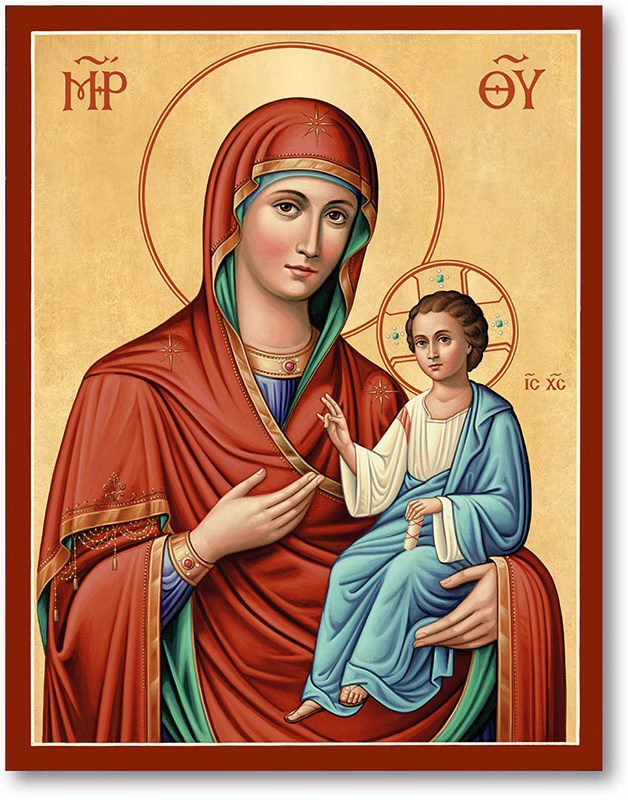 Thursday: As you read through the Christmas story in the Gospel of Luke, we tend to stop at v. 20 when the shepherds depart rejoicing. Doing so, though, means we miss one of the great moments of joy that comes with Christ’s birth.
40 days after Jesus’ birth, Mary and Joseph went to the temple in Jerusalem to conduct the purification rites commanded by the Torah. As they prepare to enter the temple, a man comes out of nowhere to confront them. The man is a little wild-eyed and frenzied. We can imagine Joseph and Mary recoiling from this total stranger who seems more than a little inappropriately interested in their infant son.
But the man is not crazy—he is bursting with joy.
This is St Simeon—a holy man who had devoted his life to watching and waiting for God’s messiah. On this day, watching the steady stream of pilgrims entering the temple, Simeon is suddenly awakened by the Spirit to pay attention to a small family in the crowd. He dashes through the throng, jumping in front of the holy family. This, this is the child he has been waiting for! Here is the messiah of God! He cannot believe he is actually seeing him. He cannot believe all of his hopes have been fulfilled. His joy floods out of him. He can now depart in peace—God has fulfilled every promise Simeon hoped for. He has seen the face of God in a little child.
Remember that as you look upon the children you meet this season. They are hope. They are possibility. They are promises.
Rejoice! God is still at work! God is still active among us!
Scripture: Luke 2:22-35
Prayer—
O Lord
May we continue to hope
May we continue to see possibilities
May we continue to look for promises kept
May our joy bloom within us
Come, Lord Jesus
Amen
 Wednesday: Joy is possible.
Watch a child walk through a garden festooned with thousands of Christmas lights. Watch a puppy chase a bubble. See a patient get told they are cancer free. See a serviceperson come home from a deployment to be met by family at the airport. See a choir hit all the right notes.
Joy is possible.
The Christmas story is full of moments of joy. We might some of them, though, because of where they come.
One of my favorites is the moment when the magi finally find the home of Mary and Joseph—the star having led them to the exact spot. They have come from far, far away. They traveled for weeks, enduring 1st Century perils and tribulations—remember, they were on foot or, at best, astride camels. The Hilton did not yet exist, so they either camped out between Persia and Israel, or made do with whatever way-station appeared. They had to be on guard for bandits who would have been after their animals. They had to deal with the bureaucratic buffoonery of Herod and his henchmen in Jerusalem who seemed about as ignorant as rocks to the magi. But, at last, they found the house. Imagine their joy as the walk through the door and catch a first glimpse of the Child. Here was all that made the journey worth it. Here was a dream fulfilled. Here was God.
Joy is possible.
Look for it this season. Look in unexpected places. You never know where the messiah may be lurking. Look for him.
Scripture: Matthew 2
Prayer—
O Lord
May miracle and wonder blossom before us
May light infuse all our darkness
May joy ignite within our spirits
May we find what we’ve been looking for
Come, Lord Jesus
Amen
 Tuesday: The message of the angel to the shepherds was clear, resounding, and resolute—the angel brought GOOD NEWS OF GREAT JOY FOR ALL THE PEOPLE…
When the New Testament speaks of good news, it is actually taking something that the original audience would have been quite familiar with—Roman emperors routinely would announce GOOD NEWS throughout the empire whenever they had done something particularly momentous—usually involving something that made the emperor look really good, incredibly strong, or invincible. The imperial GOOD NEWS was always really good news for the emperor, but for everyone else, maybe or maybe not. Sometimes GOOD NEWS meant a hike in taxes, or a new presence of an empowered and unfettered Legion in your village, or the assurance that you were stuck with whatever bad officials who ran the village. The New Testament writers take this practice and turn it on its head—their GOOD NEWS really is good news—for EVERYBODY!
The angel kicks things off by bringing Jesus’ birth announcement to a group of people who probably needed a dose of good news more than many others. Shepherds were among the bottom rungs of Roman society. Many did not have homes, but instead followed a nomadic existence, trailing after their flocks continually in search of good grass to eat. Villagers did not welcome them should they pass through because they were notorious for causing a ruckus when they arrived. Villagers would lock up the women and children, put their valuables in hiding, and make sure the food was secure when shepherds arrived. But it is to them that the angel comes.
Why?
Because they were the most in need of good news. They needed to know God was with them. They needed to know that the Great Shepherd had not forgotten them.
And note their response—they rejoice! They sing, celebrate, and shout the good news to anyone who will listen. Imagine how different this arrival was in Bethlehem from the normal way shepherds came to town. This was transformation! This was a new day! This was GOOD NEWS!
And so it is for us, as well. One of the truths of the Gospel is that God draws nearest to those who feel the most removed from God. The good news of great joy truly is for all of us.
Enjoy it! This is good news we can trust to be GOOD NEWS!
Scripture: Luke 2:1-14
Prayer—
Lord Jesus, we rejoice, thanks be to you. Come, Lord Jesus. Amen.
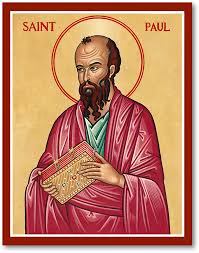
Acts tells us that more than a few were skeptical of this new convert, having witnessed the suffering he inflicted on their brothers and sisters. Who could blame them?
But Paul persevered. He allowed himself to be consumed by joy—yes, joy—in receiving the saving grace of Christ. His life gained a richness and depth he had never tasted before. There was meaning and purpose that boggled his imagination. There was joy that overwhelmed everything else in his life—even moments of darkness, suffering, and hardship. Joy ruled him.
When was the last time—if ever—you have ever felt that sort of joy? When was the last time—if ever—you have received a gift so profound it changed your whole existence?
Yet…that is God’s offer to all of us in Christ’s birth. All can be well. All manner of thing can be well. God is good and grace abounds—even for all of us!
There can be joy!
Scripture: Philippians 4:4-7
Prayer—
Lord Jesus
May your light shine brightly before us, leading us into grace, hope, and redemption
May your Spirit fire joy within us that nothing can take from us
May joy lead us through this day and each day we have
Come, Lord Jesus
Amen

Sunday: If you are in church today, and that church has an Advent Wreath with candles being lit each Sunday as we draw closer to Christmas, you will notice something—today’s candle is PINK!
Why? Advent is a season of preparation. We clear the decks, so to speak, making room anew for the Christ within our hearts. We want to clear away all that makes us less than present for celebrating the birth of Jesus and accepting the miracle of grace that comes through the Incarnation. Within the ancient Church—and even within our own time and place—that means that Advent is a season of confession, repentance, turning around in our lives, and generally trying to get ourselves in the right place.
But…
The Church fathers who developed the worship practices for the Church decided that we needed a break—especially in a season so full of light as Christmas. Therefore, they set aside the third Sunday of Advent for JOY—a chance to let loose and celebrate with choirs of angels, a ragamuffin band of shepherds shocked into celebrating a messiah they had no idea was coming, and a set of new parents gathered beside their newborn son reveling in the miracle of birth.
Many churches set aside this Sunday as a worship dominated by music and song. What better way to celebrate the coming of the Lord than with joyous music, songs of praise, and ringing carols? Today is a day for singing and dancing, for joining the chorus of creation itself rejoicing in their Creator. Let yourself be free.
We have heard good news of great joy—ACT LIKE IT!
Scripture: Psalm 98
Prayer—
O Lord
We lift our hearts in joyful worship
Celebrating the coming of the King of Kings, the Lord of Lords, and the Redeemer
Hear our praise offered with full hearts and glad minds
Come, Lord Jesus
Amen
 Saturday: We have come to the end of the second week of Advent. Through prophet, apostle, and even Christ himself, we have meditated on peace—what it is, how to attain it, and how to bring it into our lives.
We affirm that Christ was born to bring peace to the earth. Christ came to reconcile sinners with their God; to reconcile human beings in conflict with one another; and to bring the Peaceable Kingdom into actuality. Through Christ’s life, death, and resurrection; the peace of God was revealed and came into the world.
May we have eyes to see, hearts to know it, and minds to discern it.
But more than that, may we commit ourselves to the practice of peace. May we take to heart Christ’s beatitude for all who would make peace within the world. Indeed, to devote ourselves to the ways of peace reveals us to be children of God, for God seeks the peace of one and all, continually and constantly.
Each Christmas, we sing ‘Silent Night,’ illuminating candles as we sing. More than a few folks will declare that it is one of the most peaceful moments they ever experience.
And that is something we do not have to limit to a single evening. Such moments are possible in any place at any time if we have hearts and minds attuned to bringing peace into every moment. We can share the patience of God and affirmation of Christ that all are one in him wherever and whenever we find ourselves.
May peace reign over us, in us, through us, and around us as we draw another step closer to Bethlehem and the manger there.
Scripture: Matthew 5:9
Prayer—
O Lord
May we become peacemakers
Bringing stillness and shalom
To our everyday encounters
Revealing your gracious presence
In every moment
May peace reign in every heart
Amen
 Friday: The Book of James is fascinating, Although it is listed as one of the letters in the New Testament, it is actually better understood as an instruction manual for members of a church. James seems most interested in being sure church folk know how to behave themselves and gather together in a way worthy of Jesus.
One thing that particularly troubles James is the power of the tongue to bring strife and conflict. Repeatedly he admonishes his audience to guard their tongues, refraining from speaking without thought or care. He knows how words can hurt. He knows how what something someone says can be taken as offensive, leading to arguments, hostility, and division.
Instead, he argues that we should strive to live by true wisdom—to listen first, then speak; to speak with love, compassion, and grace; and to foster unity, harmony, and peace with our words.
Think for a moment in your own lives of a time when someone said exactly the WRONG thing and the mess it made. Use that to teach a better way of speaking. Think how we might speak in such a way that leaves us in a better place, more unified, and more able to experience the communion of Christ wherever we might find ourselves.
Now think of a moment when someone said exactly the RIGHT thing. Recall what a difference it made in how things went. Think of how that helped people feel better about themselves and each other.
Follow St James as he teaches us how to speak peacefully.
Scripture: James 3:13-18
Prayer—
O Lord
Help us to set aside all that prevents peace from taking hold
Forgive our foolish ways and words that bring only discord
Grant us the grace necessary
To act with care and speak with gentleness
So that peace might prevail in every situation
Come, Lord Jesus
Amen

Are we as ready to acknowledge that same dependence on God for our own well-being?
So many things within the world argue against such a confession. We are told repeatedly that we can be ‘self-made.’ We are told to commit ourselves to ‘self-fulfillment.’ We can read countless books teaching us how to assert ourselves and get whatever we want when we want it.
But that is not the wisdom of Psalm 34.
Instead, we find David praying for the wisdom to lose himself in God. He prays for the wisdom to let go of any illusions of self-gratification or self-actualization. He knows that all he has comes from God.
And he knows that with God, even peace is possible—a contentment with life as life comes. It is a peace that at once comforts, but also compels us to align ourselves with God. Only in so doing can we find lasting peace.
It is no wonder David became the model of what the messiah would be. Here is the complete devotion to God that faith requires, a complete subjection to the will and rule of God that allows life to become exactly what God intends for life to be.
May we all have to wisdom to follow David’s example.
Scripture: Psalm 34
Prayer—
O Lord
Teach us your ways
Inform us of your will
May we conform our lives to your ways
May peace rule within our hearts
May your light show us the way
Amen
 Wednesday: Do you ever watch nature shows?
They are fascinating. We catch glimpses of the world around us through the experiences of the creatures who live within it. What we find is that animal kingdom is a fearsome place to be. Predators lurk everywhere, seeking one more meal. Prey animals have to be constantly vigilant, listening for every rustle in the weeds, watching for the slightest twitch in the shadows. It is a highly competitive and winner-take-all world. The mantra always seems to be, ‘Eat or be eaten.’
Isaiah’s vision is something else altogether.
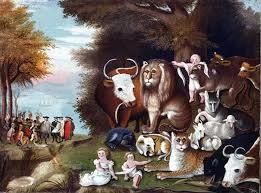
In his vision, the distinction between prey and predator vanishes. No longer does any creature prey on any other. All will eat grass and leaves. What you may not immediately recognize is that the prophet is hearkening back to an image from the creation story—in Genesis 1:29-30, God ordains vegetarianism for all life!
Isaiah sees a restoration of that world in the coming of the messiah. So profound and so powerful will be the messiah’s intervention and interruption of the world as it is, that it will revert to its original created state.
Now, the prophet may well be lost in poetic hyperbole, but what he proclaims is news worth sharing. As we draw more closely to Christmas, we need to take stock in just how profound a mystery we proclaim. Jesus—the Christ Child—is God with us—Emmanuel. That being the case, it means that God is reordering and refashioning all that is. God is restoring the created order to its intended state of being.
And that is good news of great joy for all people!
Scripture: Isaiah 11:1-9
Prayer—
O Lord
We pray that the peaceable kingdom might come
We pray for a day when all enmity and strife shall cease
We pray for a day of quiet and calm
We pray for a day when your love will lead us
We pray for a day when all rests in you
Come, Lord Jesus
Amen

That probably seems like a ‘Johnny Obvious’ statement, but in actuality, it is something we continually need to remind ourselves of.
Why?
Because trust is something that our world seems intent on dissolving. Think about that for a moment. Once vaunted institutions are no longer considered trustworthy—
we do not trust our elected officials to look out for us
we do not trust schools and educational institutions to teach our children
we do not trust doctors to truly care for us and keep us well
we assume everyone is out for a buck, whether what is done is good or beneficial
This was true even in Jesus’ own day—look at what he tells his disciples. Unlike the world, which makes many bold promises, but rarely follows through; Jesus makes promises he intends to keep.
If Jesus promises peace for us, then peace will come.
It is God’s own word to us—a word that will be kept in and through God’s own righteousness—i.e., God’s being true to God’s own being.
Real and lasting peace can be a part of our existence. Real and lasting peace can inform our lives, decisions, and engagements with the world.
So open your heart to Jesus. Allow him to offer you the peace that passes all understanding. Allow him to bring settledness into your lives. Allow him to calm your souls. He does not give as the world gives; he gives through the righteousness of God.
Thanks be to God!
Scripture: John 14:27
Prayer—
Lord Jesus
We trust in you
For you have given to us
All the gifts of grace
Allowing us to live freely and fully
May your peace descend upon us
Granting us serenity here and now
Amen
What is this powerful peace that Paul describes?
A peace that passes all understanding. It is a peace so profound and so deep that it defies our imagination.
Paul is thinking of the peace of a true sabbath. If you reread the creation story in Genesis 1, you will come to the greatest sabbath ever imagined—the sabbath of the Seventh Day—a day when everything was so perfectly as it was meant to be that not even God had to do anything.
NOT EVEN GOD HAD TO DO ANYTHING.
That seems a far cry from the world as we know it. Our world seems lost in chaos and disorder. Our ability to live free from the rancor of partisanship seems severely handicapped. Our ability to be fully open to the people around us seems stunted. War and violence affect far too many people all around the world, and even here at home.
Yet, Paul sees in Christ an alternative. Through Christ, there can be peace—even the peace of the Seventh Day. It comes through all the aspects of Christ’s salvation—Christ restores us; Christ reclaims us; Christ reconciles us; Christ redeems us; and Christ raises us into new life.
As we accept this great saving work of Christ, there can be peace. Christ eradicates all that separates us, enabling us to see one another as siblings in God’s fellowship. And as that transformation comes, there can be joy—real and lasting joy.
Come, Lord Jesus!
Scripture: Philippians 4:4-7
Prayer—
Lord Jesus
May your peace descend upon us
May it bring calm, solace, and comfort to one and all
Make us instruments of your peace
Bringing reconciling grace into each encounter
And
Hope for a better world to fruition
Amen
 SUNDAY: One of the titles we give to Jesus is ‘The Prince of Peace.’ The source for that title is Isaiah 9:5—a messianic oracle in which the prophet hears God’s own description of who and what the messiah will be.
According to Isaiah, the messiah will be a multifaceted figure—one who meets us on several levels. He will offer us the necessary wisdom needed to live as people of God within a world that hardly seems interested in the other-centered, self-sacrificial compassion God wills of human existence. He will be God with us, offering us the full power of God’s redeeming grace in every moment and circumstance. Through him, we will come to know the way of God, the love of God, and that we are all children of that God. And he will bring peace to the earth, reconciling all people with each other and with God.
Just take that in.
That is an astounding promise embodied in a single individual. If we heard any of our friends and neighbors make such a claim about themselves, we would rightly meet it with skepticism. And so, too, was Jesus doubted by his original audience—even among his disciples, as St Matthew reminds us in the close of his gospel when the disciples met with the Risen Lord—‘They believed, but some doubted…’
Yet, it is the good news of great joy for all people. Jesus IS that messiah. Jesus does indeed bring to fulfillment all of those promises of God.
In short, Jesus saves.
Thanks be to God.
Scripture: Isaiah 9:1-5
Prayer—
O Lord
Help us prepare room in our hearts
For the coming of the Lord
May we celebrate the Wonderful Counselor
May we welcome the Mighty God
May we follow the Everlasting Father
And may we practice the reconciliation of the Prince of Peace
Amen
___________________________________________________________________________
WEEK 1: HOPEFULNESS
 As we reach the end of the First Week of Advent, we consider the hope we have, the hope we hold, and the hope that leads us through each moment of our lives.
Hope is expectation. It is expectation built on the experience we have of God in our lives and the shared experience of all the saints of scripture and all those who shaped us.
Hope is also assurance. It is assurance that comes through the daily encounter with the love of God manifested in friends, family, coworkers, and all others who share kindness, generosity, and compassion with and for us.
Hope allows to face the days to come with confidence and grace, knowing that all can be well through the redeeming presence of God.
Advent is a season of hope because it weaves together all of these elements in one singular focus on the birth of the Christ Child. The child Jesus is the answer to the hopes and longings of all who went before him—a sure and certain sign of God’s presence with them. The child Jesus is our hope because he is the continual reminder of God’s love for us each and every day. He stands as a beacon for us to ‘go and do likewise’ as we live within the world. The child Jesus is also hope for the future because as the child grew into the messiah, so the redeeming grace manifested in him continues to grow day after day, bringing more and more of the kingdom into our midst.
So hold onto hope. Nurture it. Nourish it. Bring it to fruition in your words and actions.
Scripture: Isaiah 7:10-14
Prayer—
O Lord
Feed our hope so we might live by faith
Feed our expectations so we might look for signs of you all around us
Feed us our daily bread so hope might grow continually within us
Come, Lord Jesus
Amen
 Friday: The Epistle to the Hebrews is a fascinating book within the New Testament. It tells us that Jesus is our great high priest—the only priest able to offer a sacrifice, be the sacrifice, and claim the power of the sacrifice to make us one with God and one with one another. To many of us, it is a strange book that is hard to get our minds around. We do not worship as they did. It seems so alien.
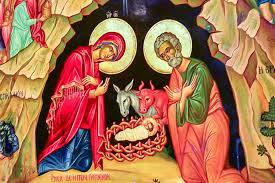 THURSDAY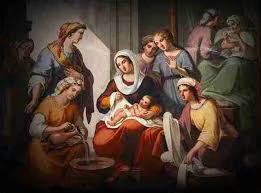
SUNDAY
Advent is a season of waiting and watching. Children capture it best as they count down the days to Christmas morning—each day becomes a little more exciting than the last as anticipation builds for the BIG DAY!
When was the last time you waited for something with that much expectation, excitement, and anticipation?
Sometimes we adults have a hard time with waiting. It is just one more trial to be endured. We wonder and complain why we can’t get what we want right when we want it.
But the truth is that waiting might be good for us—ever acted rashly? Done something on pure impulse? Then come the regrets…
Advent is a season of waiting, but is not a season just to be endured. It is a time when we can prepare ourselves anew for the gift coming on Christmas—the renewal of the covenant between God and man—the celebration of the Christ Child—the sure and certain sign of God’s astounding and abiding love for us. We need to time to make room in our hearts, to still our burdened and worried minds, and soften our outlooks for the reception of the Child.
Doing so ensures we will welcome him as we need to—receiving the gift of grace anew and aright. He is our hope—then, now, and always.
Be still and wait.
God is coming.
Scripture: Psalm 46
Prayer—
O Lord
Help me wait
Grant me the gift of patience
Grant me the serenity of waiting with an open heart and ready spirit
May Christ be born anew within me
Come, Lord Jesus
Amen